

Are Chinch Bugs Dangerous?
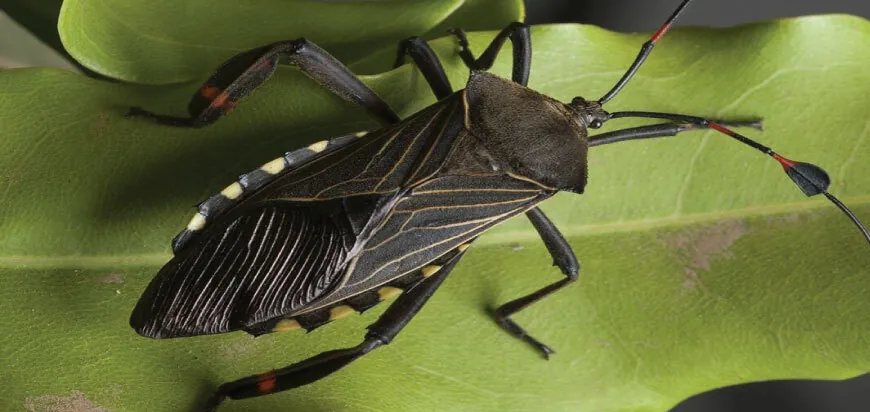
| Scientific Name: | Blissus leucopterus |
|---|---|
| Color: | Orange |
| Shape | Oblong, Oval |
| Life Span | 50 days |
What Chinch Bugs Do to a Lawn
Chinch bugs are not dangerous to people or pets — they do not bite, sting or spread disease. They are seriously damaging to lawns. They pierce grass stems and drink the sap, injecting saliva that kills the blade. The result looks almost exactly like drought stress, which is why most lawns are already badly damaged before anyone realises the cause is an insect.
The distinguishing test is simple: grass browned by drought recovers after steady rain, and grass killed by chinch bugs does not. Damage also spreads outward in patches from warm, sunny areas rather than appearing evenly across the lawn.
How to Spot Chinch Bug Damage
Chinch bugs are devastating, and their damage looks similar to that caused by drought, making it hard for homeowners to tell the difference and respond appropriately. However, unlike drought stress, your grass will not recover when it rains if bugs have damaged it. You can also tell the difference by looking closely at the edges of damaged areas. If you see nymphs, adult chinch bugs, and bug carcasses, you know the damage is due to infestation. Keeping your thatch to a minimum can also help reduce the risk of multiplying nymphs and adults. Once you have identified chinch bug damage in your yard, the next step is determining the problem's severity. To do this, remove the bottom of a coffee can and push it into the patch of ground where you have noticed the damage. The bugs should make their way to the top of the can within a few minutes. If more than 15 insects appear within the first two minutes, the infestation is severe enough to require pesticide control methods.
Why Chinch Bugs are Bad News
Chinch bugs are harmful not only because they are hard to detect but also because they deprive plants of vital moisture and nutrients. Chinch bugs drink the juice directly out of the grass stems.
Meanwhile, their saliva injures the grass, causing it to wither and turn brown. Worse still, these tiny terrors tend to concentrate in warm, sunny areas of the yard, which are the most likely to suffer from drought and heat stress. In this way, the insect's compound damage from other sources with the stress of their own makes it difficult for your lawn to survive.
Types of Chinch Bug Treatments
Chinch bug control typically takes three forms:
Prevention- If chinch bugs have attacked your yard or others in the area in the past, the best strategy is to apply pesticides before they have a chance to infest your grass. By administering grub rate insecticides toward the end of May, you can kill these insects early, keeping your grass safe from all harm.
Chemical Extermination- Even if a chinch bug invasion is already underway, there is still a chance to save your grass. By spraying insecticides in all areas of the yard that show damage, you will kill the vast majority of chinch bugs and give your grass a chance to recover.
Natural Competition- Besides killing chinch bugs with insecticides, you can also eliminate them by allowing predatory big-eyed bugs and other natural predators to eat them. This method effectively controls sparse infestations while having few negative effects of insecticide treatment.
The most effective treatment for bugs will depend on the problem's severity and your yard's specific characteristics. If the invasion is relatively small, you should let predatory bugs handle it. In this case, avoid spraying insecticides, as they may help the bugs spread by killing their big-eyed predators. A severe infestation may require chemical bug control measures.