

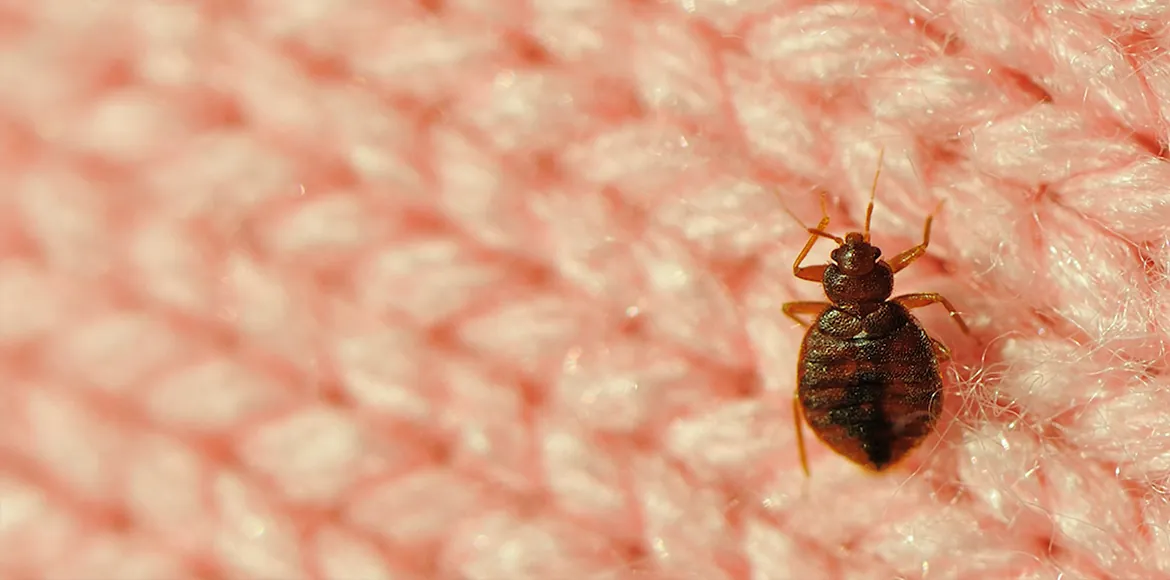
- Bed Bugs Seem To Be Very Small And Look Very Little To Harm You
| Scientific Name: | Cimex lectularius |
|---|---|
| Color: | Gray to Reddish brown |
| Shape | Oval and Flat shape like apple seed |
| Life Span | 250-450 eggs in lifespan, 1-5 eggs per day, Hatched in 7-12 days, takes 4 weeks to be mature. |
| How to kill bedbugs? | Vacuuming, Steaming spraying, Dusting |
Bed bugs are eliminated by treating every harbourage in the room on the same day — mattress seams, bed frame joints, headboards, baseboards and the furniture around the bed — then treating again after 10 to 14 days. The second visit matters because eggs survive most treatments and hatch after the first one. Most rooms take two visits.
Partial treatment is the usual reason an infestation comes back. Bed bugs move along skirting, wiring and shared walls, so treating one room while the next is left alone simply relocates them. Throwing out a mattress without treating the room does not work either, and can spread them further through the building on the way out.
For More Details About Bed Bugs Please VisitHealth Canada's guide to bed bugs and California DPR's bed bug factsheet (PDF).
How To Get Rid Of Bed Bugs?
Bed bugs are not a DIY pest, and the reason is specific rather than sales talk: the eggs. They are cemented into cracks, shielded from most products, and they hatch after a first treatment’s residual has weakened. Anything that kills only what is currently alive leaves the next generation intact.
A treatment that holds does four things. It covers the whole room, not the bed — mattress and box spring seams, bed frame and headboard joints, baseboards, the backs and undersides of furniture, and the carpet edge. It uses products applied into harbourage rather than sprayed across open surfaces. It is followed by a second visit 10 to 14 days later, timed for the eggs. And in a multi-unit building it considers the neighbouring units, because otherwise the population simply returns from next door.
Retail sprays usually make things worse. Most are repellent: they kill the few insects they touch directly and drive the rest deeper into wall voids and adjoining rooms, which turns a one-room problem into a whole-floor one and makes the eventual professional treatment harder.
What actually decides the outcome is coverage and timing. A treatment that reaches every harbourage in the room on the same day, followed by a second visit 10 to 14 days later timed for the eggs, deals with the full life cycle. One visit to one room does not.