

Spider Extermination
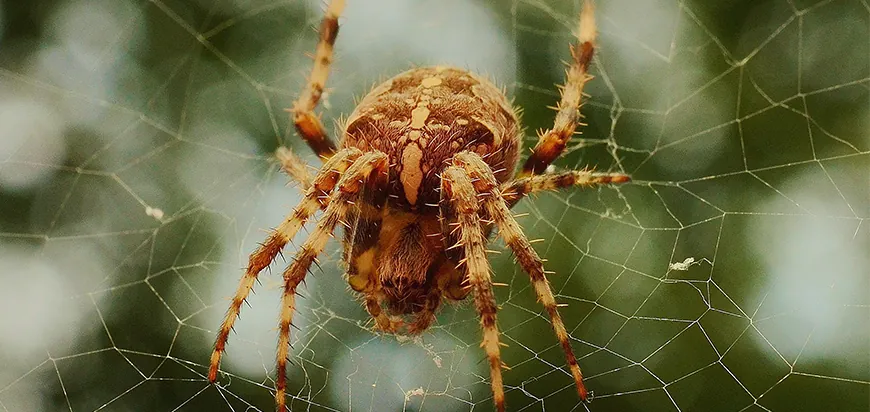
| Species: | 12 different |
|---|---|
| Found in: | Windows, Fireplace, Laundry, Flowers |
| Shape | Oval and Flat shape like apple seed |
| Life Span: | 250-450 eggs in season, 50 eggs in a silken sac. 9 egg sacs |
| Treatments: | Spraying and Aerosol Insecticide |
Spiders are controlled by removing what they feed on and treating the places they build. A residual application to door and window frames, eaves, garage corners and basement joists kills the insects spiders hunt, and the spiders leave with their food supply. Clearing webs by hand at the same visit stops survivors reoccupying them.
Indoor spiders in Ontario homes are almost always harmless species living on other insects. A spider problem is usually a symptom — a house with a lot of spiders generally has a lot of flies, moths or beetles first.
For More Details About Spiders Please Visit Health Canada on spiders
Spiders Commonly Found in Ontario Homes
- Common house spider. Builds the tangled cobwebs in ceiling corners, basements and window frames. Harmless.
- Cellar spider. Very long, thin legs; hangs upside down in a loose web in basements and crawl spaces. Harmless.
- Grass spider. Builds flat, funnel-shaped sheet webs across lawns, shrubs and foundation edges, most obvious on dewy mornings. An outdoor species.
- Wolf spider. Large, fast and hairy; hunts on the ground instead of building a web. Comes indoors in autumn and is often mistaken for something more dangerous than it is.
- Yellow sac spider. Small and pale, leaves a small silk sac in wall and ceiling corners. One of the few in Ontario whose bite is worth noting, though reactions are usually mild and local.
Two points worth clearing up, because both come up often. Tarantulas are not native to Canada. The northern black widow does occur in a few pockets of southern Ontario, but it lives in dry, undisturbed outdoor habitat — rocky ground, old fence lines, unused outbuildings — rather than in houses, and encounters are rare.
How We Treat Spiders
A residual product is applied where spiders travel and anchor their webs: door and window frames, eaves and soffits, garage corners, basement joists and around exterior lighting. Existing webs and egg sacs are cleared by hand on the same visit — a treated web left in place still looks like an infestation, and it can simply be reoccupied.
Exterior lighting is the most common reason a spider problem keeps returning. Lights draw the flying insects that spiders feed on, so webs rebuild around porches and garage doors however often they are cleared. Switching to warm-toned bulbs, or moving the fixture away from the door, cuts the food supply that keeps them there.
We are available seven days a week, 9am to 9pm. Call 226-606-7378.