

Bed Bug Inspection
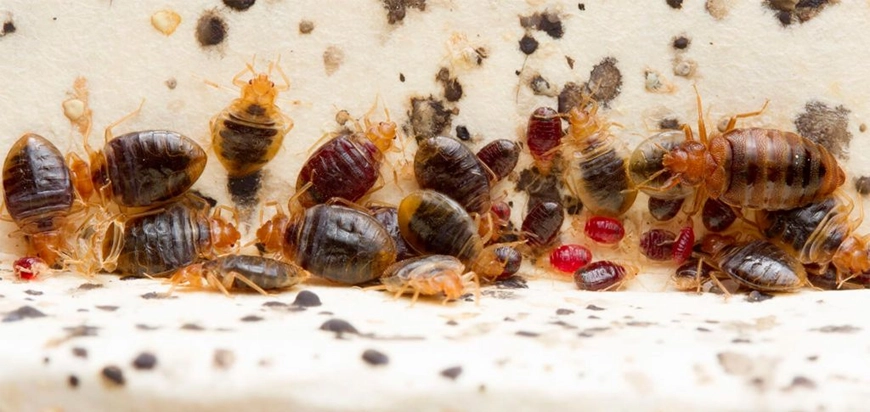
What a Bed Bug Inspection Finds
An inspection is about establishing three things: whether bed bugs are present, whether the infestation is active or historical, and how far through the room or building it has spread. Those are different questions, and only the first is the one most people think they are asking. A room can contain plenty of evidence and no live insects, which changes what should be done next and what it should cost.
We are based on Hawkins Drive in Cambridge and inspect across Waterloo Region — Cambridge, Kitchener, Waterloo and Guelph — seven days a week.
Where We Look, In Order
Bed bugs harbour where they can touch a surface on both sides at once, close to where someone sleeps. That makes the search order fairly predictable:
- Mattress piping and seams, then the label and any tufting
- Box spring, particularly the underside and the corner staples
- Bed frame joints — every point where two pieces meet or a bolt enters
- Headboard, and the wall behind it where it makes contact
- Nightstands and dressers, underside and back rather than inside the drawers
- Baseboards nearest the bed, and the carpet edge where it tucks under
- Upholstered furniture in the same room, along the seams and beneath the dust cover
- Curtain hems, picture frames, loose wallpaper and electrical outlets, in a heavier infestation
In a multi-unit building the inspection does not stop at the unit. Bed bugs travel along baseboards, through wall voids and around plumbing and electrical penetrations, so the units either side and the one above or below are relevant to what happens next.
Active or Historical? How We Tell
This distinction matters and is frequently skipped. Evidence that a room had bed bugs is not evidence it has them now.
- Live insects or fresh eggs settle it — the infestation is active.
- Dark spotting that smudges when touched with a damp cloth is relatively recent. Old spotting has dried hard and does not.
- Shed skins alone, with no live insects, no fresh spotting and no eggs, can indicate a treated or collapsed population. Casings persist for a long time.
- Monitors under bed legs and along runways resolve an ambiguous case. Left in place for a week or two, they either catch something or they do not, which is a far better answer than another guess.
When an Inspection Is Worth Booking
- Bites with no other evidence. Reactions vary enormously and several other things cause similar marks. Confirm before anyone treats.
- Before moving in. A pre-move inspection of an apartment or student rental is far cheaper than discovering the problem after your furniture is in the room.
- After travel, or after second-hand furniture comes into the house.
- A neighbour has them. In a shared building this is the single strongest reason to look, and the earliest point at which it is still a small job.
- After treatment, to confirm the result rather than assume it.
Preparing for the Inspection
Do not treat anything beforehand. Retail sprays are largely repellent: they scatter the population deeper into the structure and into neighbouring rooms, which makes an inspection less accurate and the eventual treatment harder. For the same reason, leave the bed made rather than stripping and washing everything the night before — the evidence goes into the wash with it.
Clear enough floor space to move the bed and pull furniture away from the walls, and have a rough history ready: when it started, who is being bitten, whether anything second-hand came in, and whether neighbours have reported anything.
For what the evidence looks like before we arrive, see signs of bed bugs. If the inspection confirms an active infestation, treatment is covered on bed bug extermination.