

Bed Bug Extermination
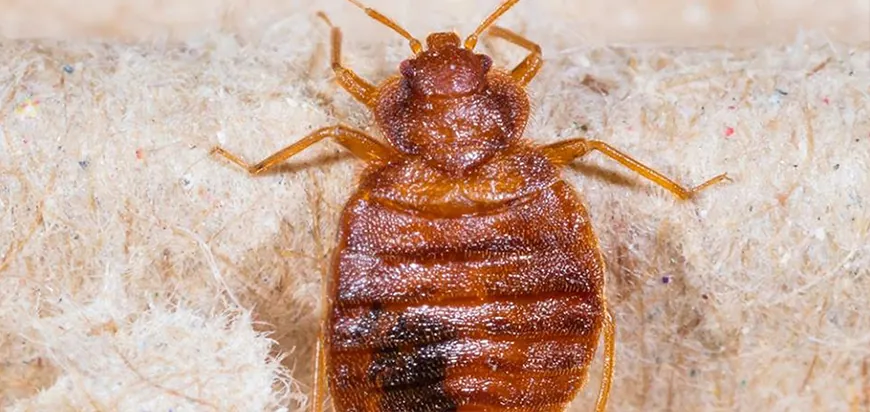
| Scientific Name: | Cimex lectularius |
|---|---|
| Color: | Gray to Reddish brown |
| Shape | Oval and Flat shape like apple seed |
| Life Span | 250-450 eggs in lifespan, 1-5 eggs per day, Hatched in 7-12 days, takes 4 weeks to be mature. |
| How to kill bedbugs? | Spraying, Dusting |
For more details about bed bugs please visit Health Canada's guide to bed bugs
Bed Bug Extermination
Bed bugs are cleared by treating every harbourage in the room on one day, then treating again 10 to 14 days later. The second visit is what deals with the eggs: they are cemented into seams and cracks, they are shielded from most products, and they hatch after the first treatment’s residual has weakened.
We treat the whole room, not just the bed. In practice that means mattress and box spring seams, bed frame and headboard joints, baseboards, the underside and back of nightstands and dressers, curtain hems, and the edge of carpet where it meets the wall. Bed bugs harbour anywhere they can touch a surface on both sides at once.
Why Retail Sprays Usually Make It Worse
Most over-the-counter products are repellent. They kill the few insects they contact directly and drive the rest deeper into wall voids, behind trim and into adjoining rooms — which turns a one-room problem into a whole-floor one. By the time a professional is called, the population is more widely distributed and harder to reach than it was at the start.
Throwing out a mattress does not solve it either. The rest of the room is still infested, and carrying an infested mattress through a hallway is a common way bed bugs reach other units in a building. If a mattress does have to go, it should be sealed and cut before it leaves the room.
Bites and Health Effects
Bed bugs feed on blood, usually at night, and typically leave small itchy welts in a line or cluster on skin exposed while sleeping. Reactions vary enormously: some people develop obvious marks within hours, others show nothing at all, so bites alone are never a reliable way to confirm or rule out an infestation.
Bed bugs are not known to transmit disease to humans. The real costs are broken sleep, the anxiety of an infestation, and secondary skin infection from scratching. Confirm with physical evidence — live insects, dark spotting, shed skins or eggs — rather than with bites.
Where They Hide, and Why It Escalates
Bed bugs are flat enough to fit into a gap the thickness of a credit card, which is why they are found in places that look solid: inside bed frame joints, behind headboards, under carpet edges, in the folds of upholstered furniture and behind loose wallpaper or a cracked baseboard.
A female lays a handful of eggs a day over a lifetime measured in months, and the nymphs feed and moult five times on the way to adulthood. That is why a small early problem stops being small: what is easy to treat in one room becomes difficult once the population has spread along a wall or into a neighbouring unit.
Preparation for Bedbug's Treatment By The Homeowner
1- Take out all bedding and place in the bags for laundry with hot water.
2- Remove mattress and box spring board from the bed and placed upright against the walls.
3- Empty drawers and closets in the bed rooms.
4- Base boards should be accessible for spray, move furniture and bed away from the walls.
5- Empty washroom cupboards.
6- Vacuum mattresses, curtain, blinds, and floors, put the clutter in sealed bags and throw away in the exterior garbage bin.
7- Any person or pet will not stay inside the house during treatment. If you have fish aquarium, turn off the air pump and cover the top, after treatment leave the house vacant at least for 4-6 hours or advise by the pest control technician.
8- People and pets can only enter the treated indoors areas after the restricted-entry interval of 6 hours or advised by the pest control technician. Ventilate treated areas either by opening windows and doors or through use of air exchange/ventilation systems confirmed to be operational. Use fans where required to aid in the circulation of air. If you experience respiratory effects after additional ventilation, contact your health care professional.
9- Alder Pest Control Inc is not responsible for any pest damage to the structure and property before, during or after pest inspection or treatment or any contents within.
10- Please do not leave your valuables unattended, Alder Pest Control Inc. is not responsible for any loss or damage.