

Rat Exterminator & Rat Control Cambridge
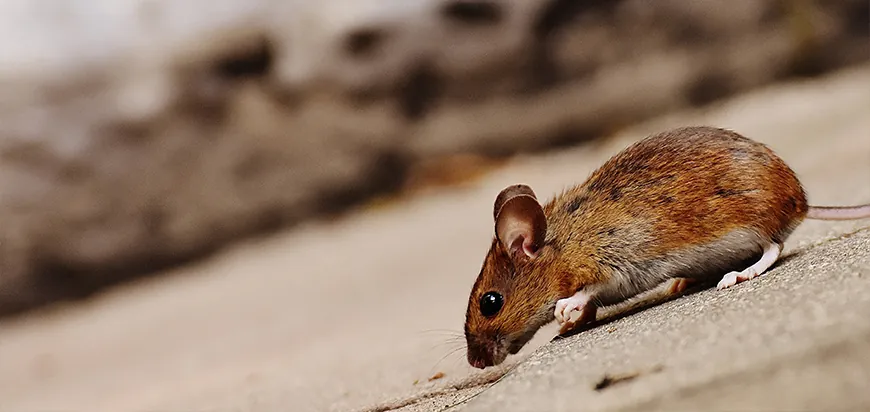
Rat control in Cambridge — and why it is not the same as mice
People use "rats" and "mice" interchangeably, but for treatment they are different jobs. Norway rats are far larger, they burrow, they are strong enough to gnaw through lead sheeting and soft concrete, and they are markedly more cautious about anything new in their environment. That last point is what catches most people out: a rat will avoid a newly placed trap for days, which is why a DIY attempt often ends with the conclusion that "there was only one" when there was not.
We are based in Cambridge, on Hawkins Drive, and cover Galt, Preston, Hespeler and everywhere in between, seven days a week.
How to tell rats from mice
Before you call anyone, these are the signals that separate the two:
- Droppings — rat droppings are 12–18mm, capsule-shaped with blunt ends. Mouse droppings are 3–6mm and pointed, roughly the size of a grain of rice.
- Sound — rats are heavy enough that you hear thumping and dragging, often from a basement, crawlspace or the ground floor. Mice give a lighter scratching, usually higher up in walls or ceilings.
- Burrows — smooth holes 50–90mm across at the base of a wall, under a shed, decking or a concrete pad. Mice do not dig these.
- Runs — rats follow the same route repeatedly and leave dark greasy smears along skirtings, joists and pipework from the oil in their fur.
- Gnawing — rats leave substantial damage on hard materials. Mouse gnawing is fine and shallow.
Where rats get in around Cambridge
A rat needs a gap about the size of a 2-dollar coin. On Cambridge properties the recurring routes are:
- Gaps where utility, gas or water lines enter the foundation
- Damaged or missing weatherstripping under garage and side doors
- Uncapped or corroded floor and roof drains, and disused sewer connections
- Cracked mortar in the older Galt and Preston brick and stone foundations
- Gaps under decks, sheds and porches, where burrows usually start
- Vents and dryer outlets with broken or missing covers
Riverside properties along the Grand and Speed see more activity, and so do homes backing onto commercial bin areas or ongoing construction — disturbed ground pushes established colonies into neighbouring properties.
Why baiting alone does not work
Bait removes the rats that are there now. It does nothing about the hole they came through, so a fresh population moves into the same void within weeks — usually the same season. This is the single most common reason people call us after trying to handle it themselves.
Rats are also neophobic: they avoid unfamiliar objects for several days. Traps set today and checked tomorrow tell you almost nothing. Effective work means placing along established runs, allowing time for acceptance, and then dealing with the access.
How we handle a Cambridge rat problem
The inspection comes first — interior, exterior, and the perimeter at ground level, to establish whether you have rats or mice, roughly how many, and where they are entering. That determines everything else.
Treatment is placed along the runs we have identified, in tamper-resistant stations where there are children or pets on the property. Then the part that actually ends it: sealing the entry points with materials rats cannot chew through. Expanding foam on its own is not one of them — they go straight back through it.
We follow up to confirm activity has genuinely stopped rather than moved. A rat job is usually two or three visits; anyone promising to finish it in one is selling you the bait step and skipping the part that lasts.
Health and property risk
Rats gnaw constantly to manage incisor growth, and electrical cable is a frequent target — it is a real and documented fire risk. They also contaminate stored food and surfaces, and their urine and droppings carry pathogens including leptospirosis and salmonella. In a commercial kitchen or food-handling business a rat sighting is a failed inspection.
Book a Cambridge rat inspection
Call (226) 606-7378. If you can describe the droppings and where you are hearing noise, we can usually tell you over the phone whether you are dealing with rats or mice — and those need different treatments, so it is worth establishing first.
Not sure which you have? See mice control in Cambridge or our general rodent extermination page. We also cover rat control in Kitchener, and everything else we do locally is on our Cambridge pest control page.